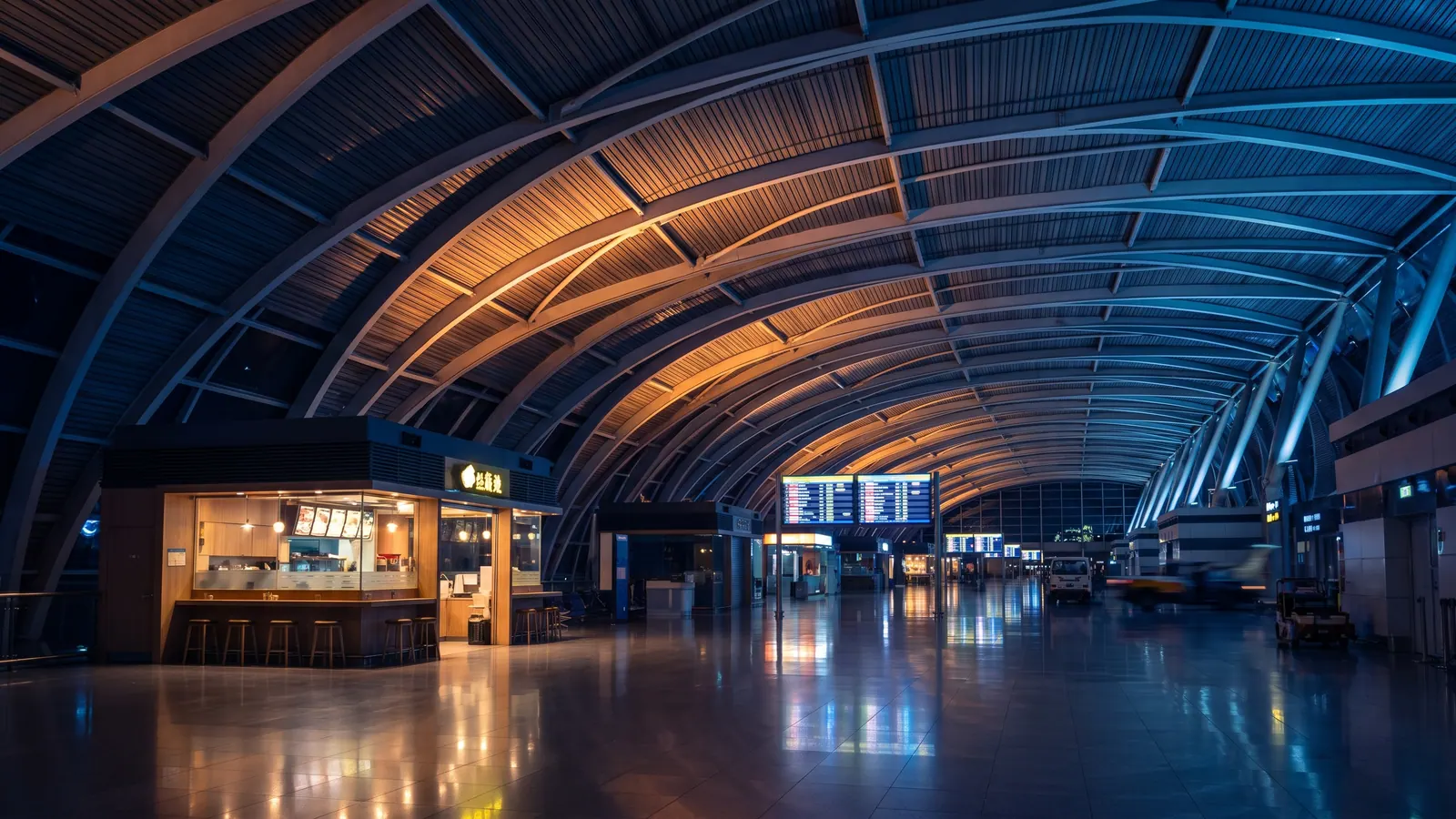
Hong Kong International HKG
Vast, cold and workable if you find the right corner.
Yes. The terminal operates 24 hours, sleeping in the quieter airside areas is tolerated, and there are showers and paid rest options. It is not built for overnight comfort the way Changi is, but it does not throw you out either.
Good to know
Walk to the end of a concourse before settling — the drop in noise and light past the last active gate is worth the ten minutes.
The terminal is heavily air conditioned overnight; a fleece or a travel blanket makes a real difference.
Night buses to the city run through the small hours and cost a fraction of a taxi — check the N-route stops in arrivals.
The inter-concourse people mover typically runs less often overnight, so allow extra time for a gate change.
What to do here overnight
The moves that actually pay off between midnight and dawn.
Sleepability score
Airside vs landside
Transit passengers stay airside and never clear immigration, which is where most of the useful overnight infrastructure sits. The concourses stretch a long way and the automated people mover between them runs on a reduced overnight pattern, so pick your zone before the last shuttle rather than after. Landside, the arrivals hall and the transport interchange stay open and lit through the night, and that is where the cheaper 24-hour food is. Terminal 2 has been out of passenger service during the airport’s expansion works, so treat Terminal 1 as the whole picture.
Where to sleep
The far ends of the airside concourses, past the last busy gates, have rows of armrest-free bench seating and are noticeably quieter and darker. That is the free option and it works. Paid alternatives include a well-regarded airside rest area with recliners and showers, several lounges with proper sleep seating, and an on-airport hotel a short shuttle from the terminal. If you are landing late and flying out early, the airside rest facility is usually the best cost-to-sleep ratio.
Lounges, scored for sleeping
Hong Kong has one of the deepest lounge lineups in Asia, and unusually, several of the contract lounges genuinely run overnight. The airline flagships are the more comfortable rooms but close with the departure schedule. For a night stuck here, the paid rest suites sold by the hour beat any lounge on the one metric that matters.
Multiple locations airside, with showers and reasonable recliners. One of the few lounge options that genuinely runs overnight here.
Landside on the arrivals level, useful if you have cleared immigration and want a shower and a base before the first morning train.
Among the best lounges anywhere for a pre-flight rest, with day suites and excellent showers. Hours track the departure schedule, so it closes overnight.
Small private cabins and recliner spaces sold by the hour, airside and open all night. The practical overnight answer if you can afford it.
24-hour services
Airside food thins out overnight to a handful of outlets and convenience stores, and prices are firmly airport-level. The landside arrivals area keeps more open and costs noticeably less, which is worth the walk if you can clear immigration. Neither side offers much variety at 3am.
By terminal
Open around the clock on both sides of security. All overnight facilities, showers and food are here; the concourses are long, so choose your end early.
Night transport
The Airport Express stops overnight, but Hong Kong is unusual in having a genuinely good night bus network — the airport N-series routes run through the small hours to Kowloon and Hong Kong Island for a fraction of the train fare. Taxis are metered, plentiful and colour-coded by territory. If you land at 2am and have a hotel booked, the night bus is a real option rather than a desperate one.
Safety & solo travelers
Safe and well policed, with security present all night. Petty theft is uncommon but not unheard of in a terminal this size, so use a bag strap when you sleep. The bigger discomfort is the cold.
Family & accessibility
Play areas, nursing rooms and family bathrooms are good quality, and the terminal is stroller-friendly. But without free recliner zones, an overnight with small children means benches and a lot of walking.
Common questions
Can you sleep at Hong Kong Airport overnight?
Yes. The terminal operates 24 hours and staff do not move sleeping passengers on. There are no free recliner zones, so the free option is bench seating at the quieter ends of the airside concourses. Paid rest suites and lounges give you recliners and a shower if you want to sleep properly.
Does Hong Kong Airport have showers?
Yes, both airside and in the arrivals area. Shower suites are sold on a pay-per-use basis, and several lounges include showers with entry. On an overnight this is the single best thing you can spend money on, and availability is generally good in the small hours.
How do I get from Hong Kong Airport to the city at night?
The Airport Express stops for a few hours overnight, but the N-series night buses run through to Kowloon and Hong Kong Island and cost far less than a taxi. Metered taxis are available all night and are colour-coded by region — the red ones cover the urban areas. Night buses are slow but perfectly usable.
Is Hong Kong Airport cold at night?
Notoriously so. The air conditioning runs hard through the night and the terminal is a large open volume, so people who sleep there consistently report waking up cold. Pack a fleece, a scarf or a travel blanket in your carry-on rather than in checked bags. It is the most common complaint about overnighting here.
Is Terminal 2 open at Hong Kong Airport?
Terminal 2 has been out of normal passenger service during the airport’s three-runway expansion works, with functions consolidated into Terminal 1. For planning an overnight, assume Terminal 1 is where everything happens. Check your boarding pass and the airport’s current information, as this is an area that changes.
Conditions change with construction and security policy. Always confirm time-sensitive details before you rely on them.