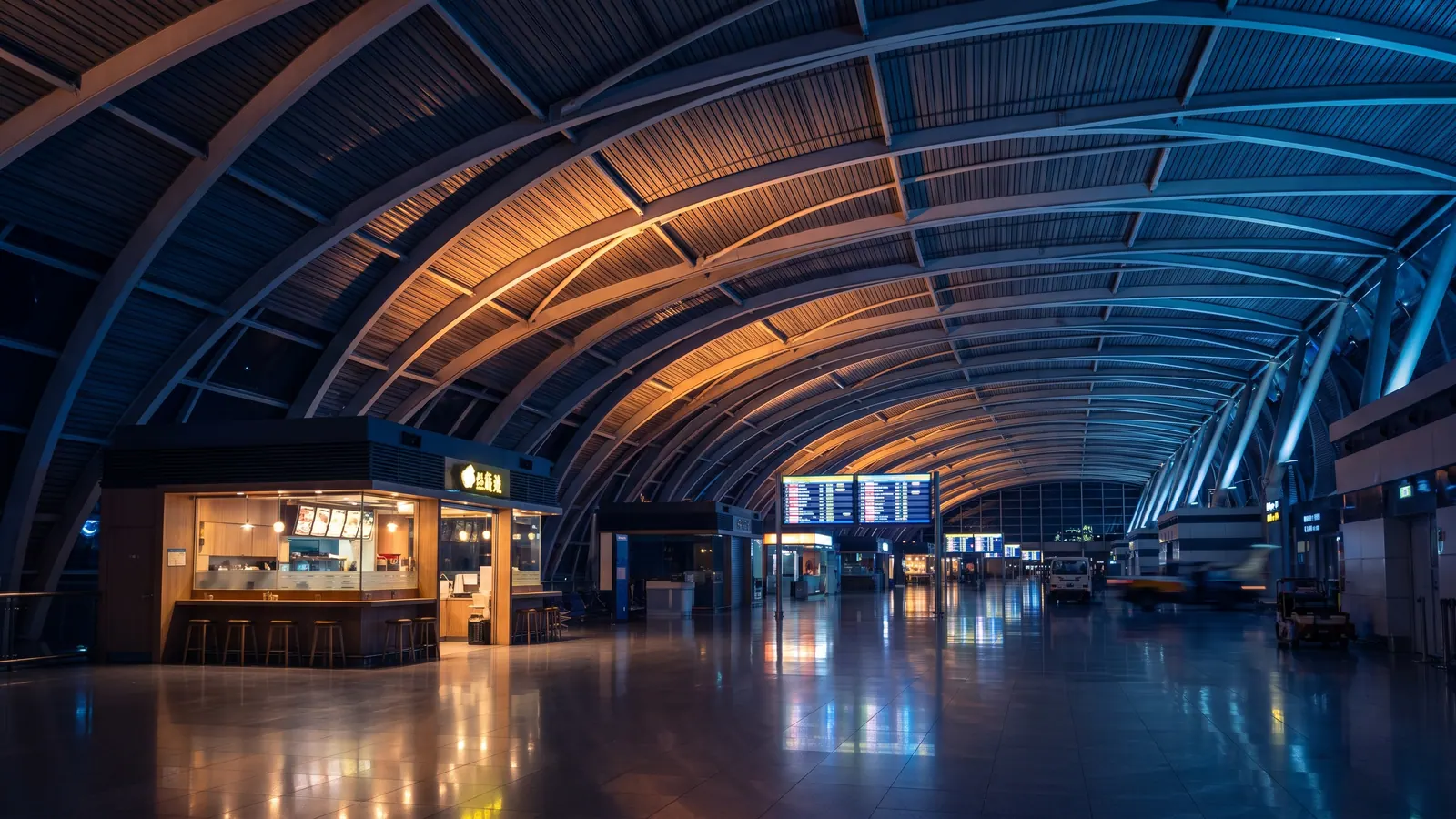
São Paulo Guarulhos GRU
A busy South American hub that never fully sleeps.
Yes. GRU operates 24 hours and Terminal 3, the international terminal, stays busy and open all night with food, showers and lounges available. The domestic terminals are much quieter.
Good to know
Terminal 3 is the international terminal and the only part of GRU that is genuinely alive overnight.
If you land domestically at Terminal 2 with a morning international flight, move to Terminal 3 before settling in.
Use the official taxi ranks or an app pickup rather than accepting an offer from someone approaching you in the hall.
Expect a burst of activity around the late-evening European and North American departures, then a calmer stretch until dawn.
What to do here overnight
The moves that actually pay off between midnight and dawn.
Sleepability score
Airside vs landside
Terminal 3 handles most international traffic and is where the overnight activity concentrates; Terminals 1 and 2 serve domestic and regional flights and go quiet after the evening bank. Terminals 2 and 3 are connected by a walkway, so moving between them is straightforward, while Terminal 1 sits apart and is reached by the free internal shuttle. International connections that stay airside do not require clearing Brazilian immigration, but anything involving a domestic sector does — and once you are landside you cannot go back through until the checkpoint reopens. Overnight the airside area of Terminal 3 remains open and is the better side to be on.
Where to sleep
Terminal 3's airside is the answer: it has the most seating, the most light and the most staff, and the mezzanine areas away from the gates go relatively quiet. Fixed armrests are widespread, so look for the padded bench rows and the carpeted waiting areas rather than the standard metal gate seating. There is a pay-per-use rest facility with reclining seats and showers, and the connected airport hotel is a short walk for a real bed. Landside, the arrivals hall stays open but is noisier and less pleasant than airside.
Lounges, scored for sleeping
Terminal 3 carries the entire lounge offering that matters at GRU, and it is a genuinely good one by Latin American standards — a card lounge, an alliance lounge and pay-per-use options, most with showers. None run continuously through the night, so use them for the shower and the meal at the start or end of your overnight rather than as the overnight itself.
Well-regarded food and proper showers; comfortable but not a sleeping facility, and it closes overnight.
Large and calm, with showers and quieter corners; hours track the Star Alliance long-haul departures.
Pay-per-use and Priority Pass access, with reclined seating that works better for a nap than most.
Domestic-side option; useful before an early morning departure but shut through the deep night.
24-hour services
GRU keeps more kitchens open late than most airports in the region, thanks to the volume of overnight long-haul departures from Terminal 3. Expect a reduced but real selection through the small hours airside, and much less on the domestic side. Landside options thin out fastest.
By terminal
Regional and low-cost operations; quiet late, few services, and separated from the main complex.
Domestic terminal connected to Terminal 3 by walkway; stays open but with limited overnight services.
The international terminal and the only sensible overnight base — food, showers, lounges and staff through the night.
Night transport
The airport train to central São Paulo does not run continuously through the night, so overnight arrivals rely on the airport bus services, taxis and ride-hailing. Guarulhos is a long way from the city and the drive can take well over an hour in daytime traffic, though at 3am it is much faster. If your onward flight is in the morning, staying at the airport rather than heading into the city is almost always the right call.
Safety & solo travelers
Inside the terminals GRU is staffed and monitored, and an overnight airside is genuinely low-risk. The practical caution is landside and outside: the arrivals curb and the surrounding roads warrant more awareness than the terminal itself, and unofficial taxi touts should be ignored in favour of the marked ranks and app pickups. Keep your phone out of sight when you step outdoors, and keep your bags attached to you while you sleep.
Family & accessibility
Terminal 3 has family restrooms and nursing rooms, and there is space to spread out on the upper levels. With small children the pay-per-use rest area or the connected hotel is worth it — the gate seating is hard and the overnight announcements are frequent.
Common questions
Can you sleep in São Paulo Guarulhos Airport overnight?
Yes. GRU operates around the clock and passengers regularly spend the night in Terminal 3, which stays open, lit and staffed. There is no dedicated free rest area, but a pay-per-use facility with recliners and showers is available, and the seating on the upper levels is quieter than at the gates.
Is Guarulhos Airport open 24 hours?
Yes. The airport runs a heavy overnight long-haul programme, so Terminal 3 never really shuts down. Terminals 1 and 2 follow the domestic schedule and go quiet after the evening flights, with most concessions closed until morning.
Do I have to clear immigration for a connection at GRU?
If both flights are international and you stay airside, normally not. Any itinerary involving a domestic sector requires clearing Brazilian immigration and customs, after which you are landside and must be re-screened. Check whether your bags are through-checked, because that often decides the question for you.
Is São Paulo Guarulhos safe at night?
The terminals themselves are staffed and monitored, and an overnight inside is low-risk. Be more deliberate landside and outdoors: use the official taxi ranks or an app pickup rather than someone who approaches you, keep your phone put away outside the building, and secure your bags while you sleep.
Where can I shower at GRU?
Showers are available in the pay-per-use rest facility in the international terminal and in several airside lounges. If you have neither lounge access nor the budget, the connected airport hotel sells day-use rooms that include one.
Should I go into São Paulo during a long layover?
Only if you have a genuinely long daytime layover. The airport sits far from the city, the train does not run all night, and traffic can turn a short hop into a two-hour ordeal. For an overnight connection, staying at the airport is the better plan.
Conditions change with construction and security policy. Always confirm time-sensitive details before you rely on them.