Tokyo Narita NRT
A curfewed airport that closes around you.
Not really. Narita has a night flight curfew and the terminals close for a stretch in the small hours, leaving only limited designated waiting areas. If you have a long overnight gap, the honest answer is to book a hotel in Narita town or take the last train to Tokyo.
Good to know
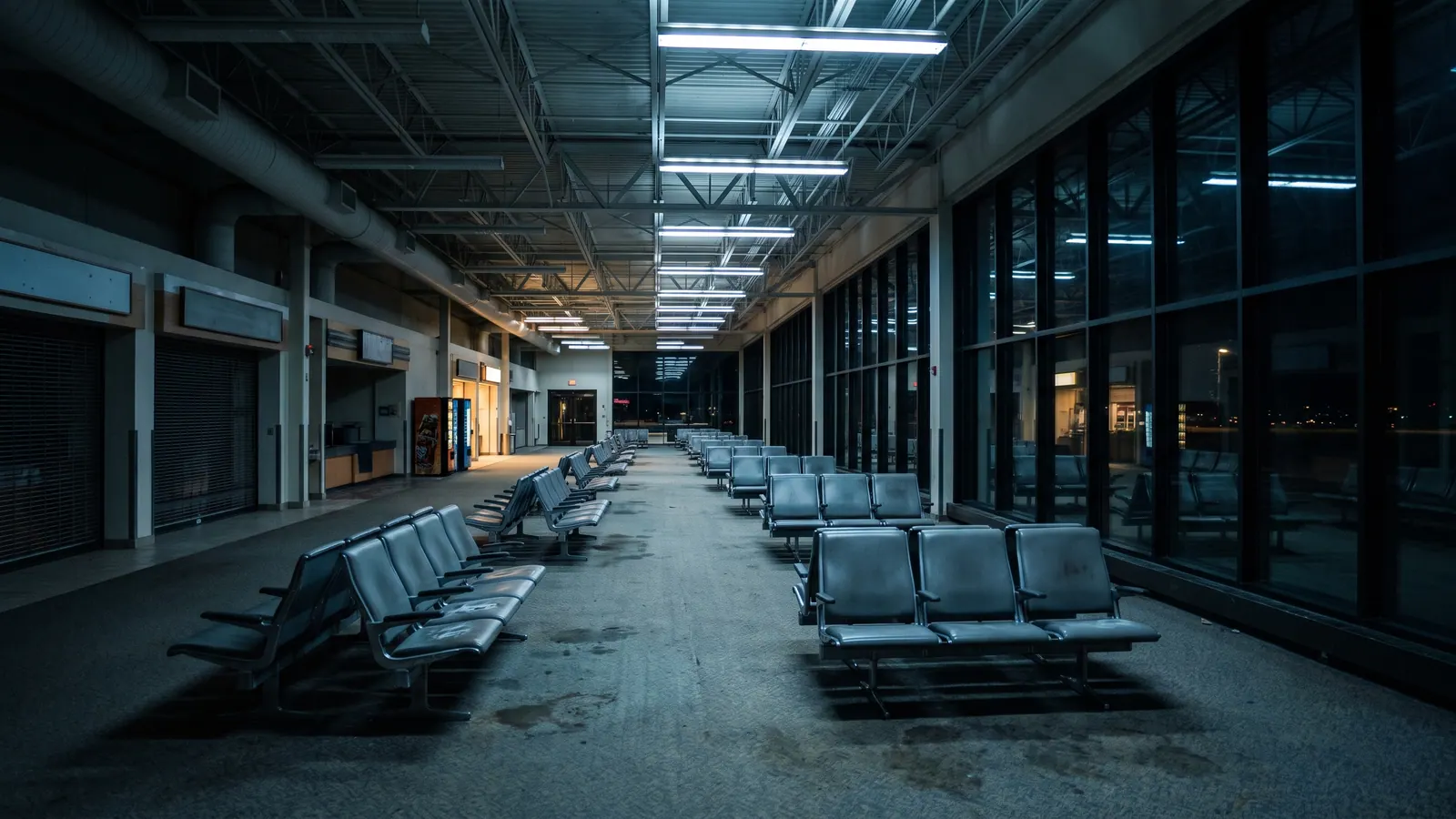
Narita operates under a night flight curfew, so there is no traffic and no reason for the concourses to stay open.
If your layover crosses the closure, book a hotel in Narita town — the shuttle is short and it costs less than a Tokyo taxi.
Overnight food shrinks to vending machines and a convenience outlet or two; buy dinner before the restaurants close.
Coin lockers let you dump luggage before an overnight, but check the collection cutoff so you are not locked out in the morning.
What to do here overnight
The moves that actually pay off between midnight and dawn.
Sleepability score
Airside vs landside
Because of the curfew there are no departures in the deep overnight, so the airside concourses empty out and close down. Landside, the terminals restrict access to designated waiting areas overnight and staff will move you out of the main halls. Terminal 3, the low-cost carrier terminal, has an open food-court area that overnight passengers use, but it is basic and gets crowded. Transfers between terminals rely on shuttle buses that thin out overnight, so do not assume you can wander across at 3am.
Where to sleep
Realistically, nowhere comfortable. The designated overnight waiting areas have ordinary seating with armrests and bright lighting, and there are no free recliners or nap rooms. Terminal 3 food-court seating is the most common improvised option and people do sleep there. The better plan is a paid one: the on-airport and nearby hotels run shuttles, several are within a very short ride, and a few offer short-stay day rooms. There is also a capsule-style option at the airport for a compact private berth.
Lounges, scored for sleeping
There is no lounge answer at Narita. The curfew means nothing operates in the deep overnight, so lounge access solves a wait before a morning departure and nothing else. If you are looking at lounges to fix a stranded night here, you are looking in the wrong place — book a room.
A small card lounge with drinks, seating and power. Daytime hours only, and it is not designed for sleeping at all.
Showers and comfortable seating for eligible passengers, but tied to departure banks. Closed during the overnight curfew.
Solid pre-flight lounge with showers. Like every lounge here, it shuts overnight, so it cannot solve a curfew layover.
24-hour services
Overnight catering effectively disappears. A convenience store and vending machines are the realistic extent of it once the terminals restrict access, and Terminal 3's food court has limited late service. Japanese convenience stores are unusually good, so stock up in the evening rather than hoping.
By terminal
Main halls close overnight; access is restricted to a designated waiting area. Not a viable place to sleep properly.
Same pattern — the terminal shuts down and overnight passengers are directed to a limited waiting zone.
The low-cost terminal keeps an open food-court area used by overnight passengers. Basic seating, bright lighting, no facilities to speak of.
Night transport
Narita is a long way from Tokyo — the Skyliner and the JR Narita Express take the best part of an hour and both stop running well before midnight. Buses run late but not through the night. A taxi into central Tokyo is one of the most expensive airport transfers in the world and should be treated as a last resort. If your flight lands late, book a hotel in Narita town rather than gambling on getting into the city.
Safety & solo travelers
Very safe in the sense that matters least here: there is essentially no crime risk. The problem is being ejected from a closed terminal into a cold, quiet building with nowhere good to sit.
Family & accessibility
A bad choice for an overnight with children. Facilities during the day are good, but the overnight closure, hard seating and bright lights make it genuinely miserable with kids. Pay for a hotel.
Common questions
Can you stay overnight in Narita Airport?
Only in a limited way. Narita’s terminals close for several hours overnight and passengers are directed to designated waiting areas with ordinary seating. Terminal 3’s food court is the most-used spot and people do sleep there. If you have a choice, a hotel in Narita town is a far better use of the money and the hours.
Does Narita Airport have a night curfew?
Yes. Narita has enforced a night flight curfew for decades because of agreements with the surrounding communities, so scheduled aircraft do not operate in the deep overnight. That is why the terminals close down and why late-arriving passengers end up stranded. Haneda, which has no curfew, handles Tokyo’s overnight traffic instead.
Does Narita have showers?
Yes, there are pay-per-use shower rooms in the terminals as well as showers inside the airline lounges. Overnight availability is limited because the terminals restrict access during the closure. Check the location and hours when you arrive rather than assuming you can shower at 4am.
How do I get from Narita to Tokyo at night?
You largely cannot. The Skyliner, the Narita Express and the regular trains all stop running before midnight, and buses follow shortly after. A taxi to central Tokyo is enormously expensive and takes over an hour. The realistic options are a hotel near the airport or waiting for the first morning train.
Is there a hotel inside Narita Airport?
There is capsule-style accommodation at the airport and a large cluster of hotels a short free shuttle ride away, several of which sell short-stay day rates. On a night when flights are cancelled these sell out fast, so book from the aircraft or the moment you land. It is usually the right call at Narita rather than the extravagance it feels like.
Conditions change with construction and security policy. Always confirm time-sensitive details before you rely on them.